How Aluminum Castings contribute to cost savings in production
Wiki Article
Advancements and Fads Shaping the Future of Aluminum Casting in Design Solutions
Technologies in aluminum casting are changing engineering services. Developments in casting techniques, especially high-pressure die casting and investment casting, are boosting accuracy and design adaptability. Automation and clever innovations play an essential function in enhancing manufacturing performance. On the other hand, sustainability is ending up being a top priority, with environment-friendly materials obtaining traction. As these trends develop, they will redefine sector criteria and consumer expectations. What implications might these adjustments hold for the future of production?Advancements in Casting Methods
.jpg)
The Role of Automation in Aluminum Casting
Automation plays an essential role in improving the aluminum casting procedure by considerably boosting production efficiency. By incorporating innovative innovations, manufacturers can streamline procedures and minimize cycle times (Aluminum Castings). Additionally, automation contributes to improved high quality control, ensuring constant product criteria and decreasing issuesEnhanced Production Effectiveness
Changing the aluminum casting market, automation greatly enhances manufacturing performance. Automated systems simplify different stages of the casting procedure, reducing hand-operated labor and reducing human error. High-speed robot arms can precisely handle mold and mildews, guaranteeing constant and fast manufacturing cycles. Additionally, progressed computer formulas optimize the scheduling and administration of resources, leading to decreased downtime and improved workflow. Automation additionally allows for real-time monitoring and adjustments, making it possible for makers to respond quickly to any operational issues. By implementing automated processes, business can increase result while maintaining cost-effectiveness. Ultimately, this shift in the direction of automation not only boosts efficiency but likewise placements suppliers to satisfy the expanding demands of the market with higher dexterity and sustainability.Enhanced Top Quality Control
A significant advancement in aluminum casting is the integration of automated quality assurance systems, which enhance item uniformity and minimize flaws. These systems utilize sophisticated sensors and information analytics to keep an eye on the casting process in real-time, enabling immediate modifications based upon quality metrics. Automation lessens human mistake and increases the dependability of evaluations, guaranteeing that each part satisfies stringent specifications. By applying artificial intelligence algorithms, manufacturers can anticipate prospective failures and proactively address problems prior to they intensify. This not only enhances the general quality of aluminum items but also enhances the production process, bring about increased effectiveness and price financial savings. Eventually, improved high quality control via automation stands for a transformative step in the aluminum casting sector.Smart Technologies and Industry 4.0 Combination
The assimilation of clever innovations and Sector 4.0 in aluminum casting is changing production procedures. With the Web of Points (IoT) enhancing real-time surveillance, automation and robotics are simplifying procedures, while information analytics supply vital understandings for optimization. These innovations are setting brand-new requirements for efficiency and precision in the industry.IoT in Casting Procedures
Exactly how can the integration of IoT technologies improve the performance and accuracy of aluminum casting procedures? The application of IoT in casting enables real-time monitoring of temperature, stress, and various other critical parameters, making sure excellent conditions throughout manufacturing. Sensors attached to the cloud can gather and evaluate data, facilitating anticipating maintenance and lowering downtime. By using intelligent algorithms, makers can determine abnormalities that may lead to issues, thus boosting quality control. Furthermore, IoT innovations enable seamless interaction between machines, enabling for worked with operations and source optimization. This interconnectedness not just streamlines process however likewise improves decision-making abilities, inevitably resulting in significant cost savings and greater efficiency in aluminum casting operations.Automation and Robotics Advancements
While the combination of automation and robotics is transforming the aluminum casting market, improvements in smart innovations and Market 4.0 are driving unprecedented performance and accuracy. Automated systems now handle recurring jobs, reducing human mistake and boosting production rates. Robotics in casting processes enables for boosted handling of complicated forms and delicate components, ensuring constant quality. Furthermore, the use of joint robotics, or cobots, improves worker security by taking control of unsafe procedures. Smart modern technologies assist in real-time surveillance and modifications, enhancing production lines without hand-operated treatment. As these developments progress, they develop an extra dexterous and responsive production setting, allowing firms to adapt swiftly to market needs and boost overall competition in the aluminum casting market.Data Analytics for Optimization
As automation and robotics continue to reshape the aluminum casting industry, the incorporation of Aluminum Castings data analytics becomes an essential element of Smart Technologies and Sector 4.0. By leveraging big datasets generated throughout the manufacturing procedure, suppliers can identify inadequacies, optimize process, and boost product top quality. Advanced formulas and machine understanding tools enable anticipating upkeep, lessening downtime and lowering functional expenses. Furthermore, real-time data analysis sustains educated decision-making, permitting for agile actions to market demands. The assimilation of data analytics not just streamlines manufacturing procedures however also promotes technology in product growth. As the market evolves, embracing data-driven techniques will certainly be necessary for business aiming to preserve affordable advantages and achieve lasting growth in the aluminum casting field.Additive Production in Aluminum Solutions
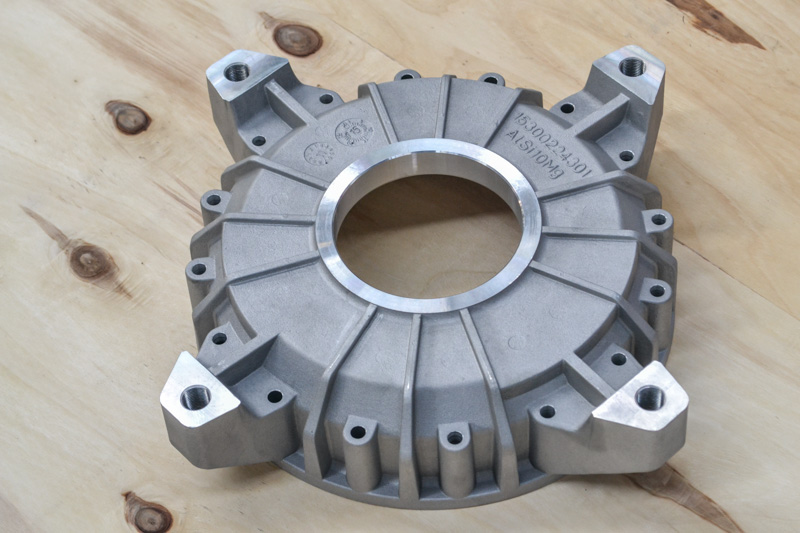
Additive production accelerates the prototyping procedure, making it possible for rapid version and layout optimization. It facilitates the modification of components, dealing with details customer requirements without the restrictions of standard casting approaches. The assimilation of advanced software program devices aids in replicating and fine-tuning layouts before manufacturing, making certain performance and precision. As the aluminum casting landscape evolves, additive production attracts attention as a transformative force, promoting innovation and opening up new opportunities for design remedies across various industries.
Lasting Practices and Recycling Initiatives
Sustainable methods and recycling initiatives are ending up being significantly essential in the aluminum casting sector, provided the expanding focus on ecological duty. Makers are embracing approaches that lessen waste and power usage, therefore reducing their carbon footprint. One popular fad is using recycled aluminum, which requires considerably less power to process contrasted to main aluminum manufacturing. This change not only conserves natural deposits but additionally reduces greenhouse gas emissions.Furthermore, ingenious casting techniques, such as die-casting and sand casting, are being maximized for sustainability, boosting material performance. Business are likewise investing in closed-loop systems that promote the reprocessing of scrap metal produced throughout production. Collaborations with recycling firms are fostering an extra reliable recycling framework, guaranteeing that aluminum items have a longer lifecycle. Collectively, these campaigns emphasize the market's commitment to sustainability while satisfying the growing demand for eco accountable services in engineering applications.
Lightweight Materials for Boosted Efficiency
The aluminum casting sector is not just concentrating on sustainability yet additionally on the growth of light-weight products that boost performance across different applications. These products are increasingly crucial in sectors such as auto, aerospace, and consumer electronics, where decreasing weight can cause boosted gas performance and general efficiency. Advanced aluminum alloys and compounds are being crafted to achieve superior strength-to-weight ratios, allowing makers to create components that are both robust and lightweight.Moreover, advancements in casting techniques, such as high-pressure die casting and financial investment casting, promote the production of intricate layouts while lessening material waste. This shift towards lightweight materials is not just changing product designs but additionally driving affordable advantages in efficiency and performance. As markets remain to prioritize weight reduction, the need for innovative aluminum casting options will likely grow, placing lightweight products as a foundation of future engineering innovations.
Satisfying the Needs of Eco-Conscious Consumers
As customers increasingly focus on eco-friendliness in their investing in choices, the aluminum casting industry is adjusting to satisfy these developing needs. Makers are currently focusing on lasting practices, such as making use of recycled aluminum, which significantly reduces energy consumption and greenhouse gas exhausts compared to key aluminum production. Aluminum Castings. This change not only preserves natural deposits however additionally interest environmentally mindful consumersFurthermore, innovative casting strategies are being developed to lessen waste and improve power efficiency throughout production. Companies are likewise discovering biodegradable layers and environmentally friendly ingredients to additionally lower their ecological influence.
Openness in supply chains is coming to be important, with brands giving info concerning their sourcing and making processes. By lining up with the worths of eco-conscious customers, the aluminum casting sector is placing itself for a lasting future, demonstrating that environmental obligation can exist side-by-side with top quality engineering options.
Regularly Asked Inquiries
What Industries Largely Use Aluminum Casting Solutions?
Aluminum casting options are mostly utilized in automotive, aerospace, and consumer items sectors. These markets benefit from aluminum's lightweight residential properties, corrosion resistance, and convenience, making it a perfect selection for various applications and parts.
Just How Does Aluminum Casting Compare to Various Other Metal Casting Approaches?
Light weight aluminum casting offers light-weight buildings, exceptional corrosion resistance, and excellent thermal conductivity compared to various other steel casting techniques. Aluminum Castings. Its versatility and performance make it a preferred option in numerous applications, especially in auto and aerospace marketsWhat Qualifications Are Crucial for Aluminum Casting Manufacturers?

What Prevail Problems in Aluminum Casting and Their Reasons?
Common flaws in aluminum casting include porosity, shrinkage, and surface area flaws. These problems typically emerge from incorrect putting methods, poor temperature control, and contamination, influencing the structural honesty and aesthetic high quality of the end product.Just How Can I Select the Right Aluminum Alloy for My Project?
Selecting the ideal aluminum alloy entails thinking about variables such as mechanical properties, rust resistance, thermal conductivity, and application requirements. Reviewing these requirements helps ensure peak efficiency and longevity for the particular task concerned.Report this wiki page